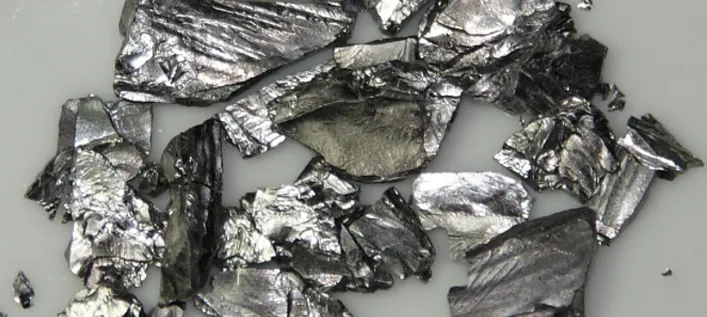
The Metal Nobody Talks About: Why Tantalum Will Decide the Next Industrial Cycle — and Who Will Profit From It
There is a reason every industrial cycle has a material behind it.
Steel built the railroads.
Oil shaped the twentieth century.
Silicon defined the digital age.
And now—quietly, without headlines or conferences—tantalum is positioning itself as the metal that will decide what comes next.
Not because it is abundant.
Not because it is cheap.
But because it is indispensable, increasingly scarce, and structurally misunderstood by the very industries already sitting on it.
That is where this conversation begins.
The Invisible Constraint Behind AI, Defense, and Advanced Infrastructure
Artificial intelligence is not an abstract concept.
It is not “software in the cloud.”
AI is physical.
It requires:
data centers
high-density servers
advanced power management
extreme reliability under heat, load, and continuous operation
At the center of those systems sit tantalum capacitors—chosen not because they are fashionable, but because nothing else performs the same job as reliably in the same space.
Tantalum allows:
higher capacitance per volume
thermal stability under stress
long service life in mission-critical electronics
Which is why it appears, again and again, in:
AI server boards
telecom and networking equipment
aerospace and defense electronics
medical and industrial control systems
This is not optional demand.
This is non-substitutable demand.
And non-substitutable demand always creates power asymmetry.
A World Divided in Two (and a Third That Refuses to Be Left Out)
Today’s tantalum ecosystem is not global in the way people assume.
It is structurally divided.
On one side:
China and India, controlling the majority of electronics manufacturing capacity, capacitor production, and downstream processing
On the other:
The United States, which designs the most advanced systems in the world—but relies heavily on external supply chains for the materials that make those systems possible
Between them:
a limited set of primary resource regions, many of them unstable, underdeveloped, or politically complex
This division is not theoretical.
It already shows up in:
procurement delays
price volatility
strategic stockpiling behavior
growing government attention to “critical minerals”
The U.S. understands this.
That’s why we are seeing an acceleration—not just in AI investment—but in material security strategy.
And here is where the conversation becomes uncomfortable.
Venezuela, Tantalum, and the American Hemisphere Blind Spot
When people talk about Venezuela, they talk about oil.
But beneath the surface—literally—Venezuela sits on one of the largest untapped coltan-bearing geological zones in the Western Hemisphere, particularly within the Guayana Shield.
Coltan is the ore from which tantalum is extracted.
Estimates from geological surveys and historical exploration data suggest tens of thousands of tons of tantalum-bearing material could be present across this region—placing Venezuela among the most significant tantalum holders on the “American side” of the global map.
This matters not because Venezuela will suddenly flood the market.
It matters because control, access, and optionality shape how industrial strategies are written.
But here is the paradox most people miss:
Even if Venezuela were perfectly developed tomorrow,
even if new primary supply came online,
it would not eliminate the bottleneck.
Because tantalum’s real constraint is not geology.
It is processing speed, traceability, and reliability.
Which brings us to the place nobody is looking.
The Tantalum Already Inside the United States
Right now, across the U.S., tantalum is moving through the economy every single day.
Not as ore.
Not as ingots.
But as:
discarded servers
decommissioned telecom equipment
obsolete medical devices
industrial electronics
high-grade circuit boards
In other words: e-waste.
Here is the number that should make you pause:
➡️ Approximately 25–30% of tantalum used in the U.S. already comes from secondary sources.
That is not a future goal.
That is what is happening today.
And yet—despite that contribution—most e-waste collectors do not actively manage tantalum as a strategic material.
They recover copper.
They chase precious metals.
They shred, blend, and ship.
And in doing so, they leave one of the highest-leverage materials of the next cycle undervalued, diluted, or lost.
Why Tantalum Is the Most Mispriced Asset in E-Waste
Tantalum has three characteristics that make it uniquely dangerous to ignore:
1. It is concentrated where others are blind
Tantalum exists in:
capacitors
fine electronic components
specific board types
Not in bulk.
Not where shredders excel.
Which means value is destroyed before anyone even measures it.
2. It benefits from AI-driven demand asymmetry
AI infrastructure does not scale linearly.
It scales in bursts.
When capacity expands, tantalum demand spikes—not gradually, but suddenly.
Those spikes reward suppliers who already have:
secured feedstock
controlled processing
established downstream relationships
Late movers don’t catch up.
They pay premiums.
3. Recycling beats mining on time—not volume
New mines take a decade.
Permits, infrastructure, geopolitics.
Recycling scales faster.
That speed advantage is why governments tolerate—and increasingly support—secondary recovery for strategic materials.
Not because it’s fashionable.
Because it works.
The Technologies That Change the Game (Already Available in the U.S.)
This opportunity is not hypothetical.
The U.S. market already has access to advanced recovery technologies capable of materially increasing tantalum yield from e-waste streams:
▪ Advanced pre-sorting systems
Using optical recognition, XRF, and electromagnetic separation to isolate tantalum-rich boards before shredding destroys their value.
▪ Targeted hydrometallurgical processes
Allowing selective leaching and purification of tantalum from concentrated electronic fractions—far more effective than legacy smelting routes.
▪ Automated and semi-automated disassembly
Focused on removing tantalum capacitors and high-value components at scale, reducing labor intensity while preserving material integrity.
The constraint is not technology.
The constraint is strategy.
What the Numbers Say (Up to 2035)
Let’s simplify the forecast.
Based on current industry trajectories:
The global tantalum market is expected to grow from under $800 million today to approximately $1.2 billion by 2035
The share of recycled tantalum is projected to rise from ~30% today to 35–40% as secondary recovery scales
The U.S. share of that market will expand as AI, defense, and infrastructure investment intensifies
Translated into operational reality:
Tantalum pricing remains firm
Buyers increasingly favor traceable, compliant secondary material
Long-term supply agreements outperform spot transactions
For waste management companies, this creates a rare condition:
➡️ A growing market with structural barriers to entry and limited competition.
The Real Return for Waste Management Companies
Let’s talk returns—without fantasy.
Companies that:
already handle high-grade e-waste
recover 25–30% of secondary materials
invest selectively in sorting and processing upgrades
Can realistically expect:
higher revenue per ton processed
shorter payback periods (12–24 months) on targeted equipment
long-term buyer relationships instead of commodity spot sales
More importantly, they gain strategic relevance.
They stop being “waste handlers”
and start acting as material suppliers to the next industrial cycle.
That shift changes valuation, positioning, and leverage.
Final Thought: Alchemy Is Not Magic—It’s Timing
Every cycle punishes those who wait for certainty.
Tantalum does not announce itself loudly.
It does not trend on social media.
It simply becomes unavoidable—quietly, structurally, economically.
The operators who win the next decade will be the ones who recognize that the most valuable materials are often the ones nobody is tracking yet.
And right now, tantalum is exactly that.
Ready to See If This Makes Sense for Your Operation?
If you want to understand:
where tantalum sits inside your waste streams
whether recovery is economically viable at your scale
what technologies and partners actually work
and what kind of return you could realistically expect
👉 Book a free 20-minute strategy call with me here:
https://sambarrili.com/schedule-free-20min-call
No pitches.
No theory.
Just a clear conversation about whether you’re sitting on an asset others are still throwing away.
To Your Success,
Samuele "Sam" Barrili
The Waste Management Alchemist