From Closet to Cashflow
How Gently Used Clothes Became One of the Most Underrated Revenue Streams in Waste Management
Let me start with a sentence that might bother a few people in this industry: if gently used clothes are still ending up in your landfill, you’re not running a waste company — you’re running a value-destruction machine. I’m not saying this to provoke; I’m saying it because I’ve seen, deal after deal, how much predictable money is being buried every single day.
For decades, waste management companies were trained to see textiles as a nuisance: low density, labor-heavy, “charity material,” something that didn’t belong in a serious P&L. That thinking was logical twenty years ago — today it’s a liability, because the market moved while the industry stayed still.
Gently used clothing is no longer waste — it’s inventory. And the companies that understand this early aren’t shouting about it on LinkedIn; they’re quietly building parallel revenue streams using assets they already own: trucks, routes, contracts, and access.
The Lie the Industry Still Believes
The biggest lie still circulating is simple: “Clothes don’t pay. Metals pay. Aggregates pay.” That lie survives only because most operators never see the material after it’s been destroyed by bad handling and zero strategy.
Waste operators usually encounter textiles at their worst: unsorted, contaminated, end-of-life. They never see grading, segmentation, resale tiers, buyer specs, or brand-driven premiums — which means they never see the market, only the mess.
Markets don’t care how you internally label material. Markets care about condition, consistency, and control — and that’s exactly where waste companies already have an unfair advantage.
Gently Used Is Not Second-Rate
Let’s define terms properly. Gently used clothing is not rags, trash bags, or fast-fashion sludge — it’s wearable, reconditionable, brand-recognizable material with a second (and third) life ahead of it.
This category alone moves billions globally every year, and here’s the punchline: waste companies already touch this material daily through bulky waste, junk removal, commercial clear-outs, and residential move-outs.
The only thing missing is value extraction. Same flow, same routes, same trucks — different outcome.
Two Monetization Paths That Actually Work
There are only two serious ways to monetize gently used clothes: become a direct reseller or become a structured supplier to resale platforms and retailers. Both work. Both scale. Both require strategy, not ideology.
This isn’t about becoming a fashion brand — it’s about becoming a materials merchant who understands grading, flow, and downstream demand.
Path #1 — Waste Company as Direct Reseller
When waste companies resell, they usually operate in one of three layers: bulk resale, category resale, or brand-focused micro channels — each with different margin profiles and risk levels.
Bulk resale offers speed and liquidity; category resale increases margins through smarter sorting; brand-focused resale unlocks premiums with minimal extra handling.
This is not retail fantasy — it’s structured arbitrage based on information and control.
London: The Case Study Everyone Should Copy
If you want to understand where this market is going, look at London. London didn’t recycle clothes — it reframed them as cultural and commercial assets.
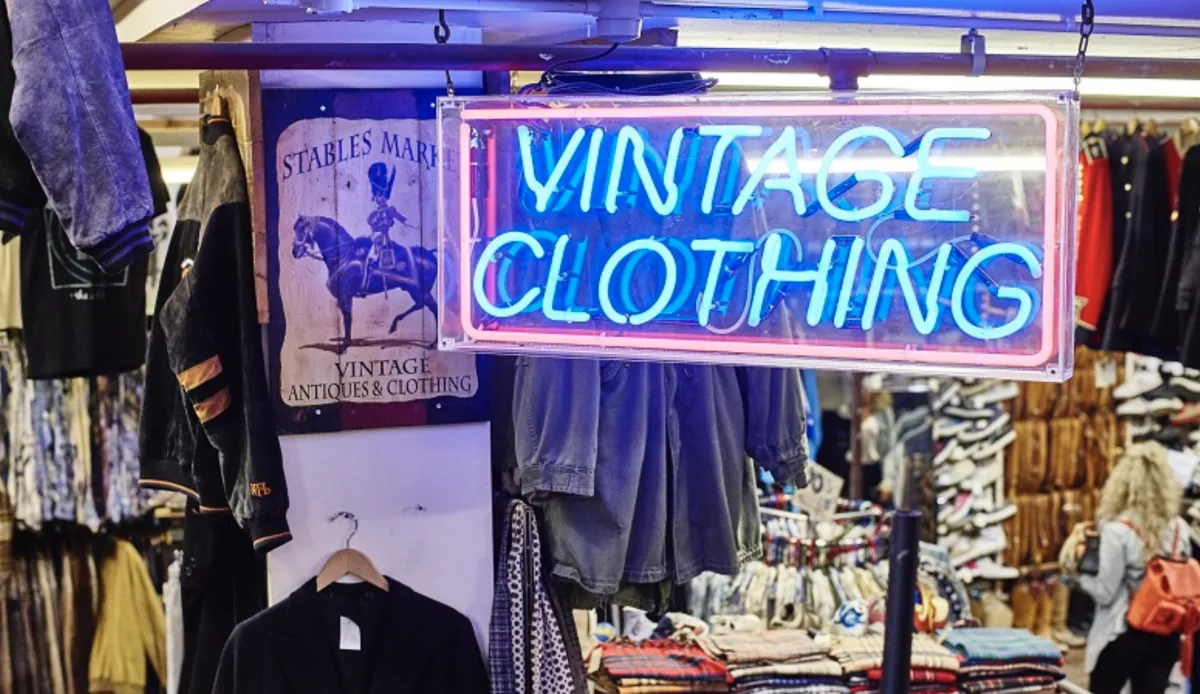
Camden, Notting Hill, Shoreditch, and Brick Lane turned used clothing into identity-driven commerce, evolving from stalls into curated, premium resale ecosystems.
Burberry Vintage isn’t cheap because it’s used — it’s expensive because it’s curated. That distinction changes everything.
What Waste Companies Miss About London
London’s model didn’t come from designers — it came from supply control, grading, and segmentation. Someone intercepted the material before value was destroyed.
That role wasn’t played by artists or influencers — it was played by logistics thinkers. Which is exactly what waste companies already are.
Path #2 — Waste Company as Supplier to Platforms
Platforms like ThredUp and Vinted don’t need random bags of clothes — they need predictable, spec-driven, repeatable supply.
They are excellent at marketing and digital sales but weak upstream — collection, sorting, contamination control, and logistics are not their strengths.
When you control quality and volume, you don’t negotiate prices — you negotiate contracts.
Why This Is a Dan Kennedy Business
Dan Kennedy taught that money lives in positioning and distribution control — not in the product itself. Gently used clothing proves this better than almost any waste stream.
The same shirt can be a cost, a donation, a low-value bale, or a premium resale item — depending entirely on management decisions.
Why Waste Owners Win This Game
Resale entrepreneurs fight for inventory. Waste companies already control access. That single difference changes the entire economic equation.
You already have permits, routes, space, and recurring flows — strategy is the missing link.
This Is Not About Ideology
This isn’t about trends, sustainability slogans, or moral narratives. It’s about arithmetic: landfill costs money, resale creates margin.
Same trucks, same routes, same staff — different revenue logic.
The Alchemist’s Final Word
Alchemy was never magic — it was seeing value where others saw nothing. Gently used clothes are modern alchemy in its purest form.
They won’t replace metals or aggregates — but they will quietly build a revenue stream that didn’t exist before.
Your competitors aren’t the ones with bigger fleets — they’re the ones selling what you still bury.
👉 Book a consultation and let’s make sure that’s not you.
To Your Success,
Sam Barrili
The Waste Management Alchemist